
URBAN (SMART) AGRICULTURE + FUTURE FOODSCAPES
Terreform: Center for Advanced Urban Research

Terreform, Inc. 2012
“New York City (Steady) State was initiated during Terreform's inception. This long-term inquiry seeks to answer the question: can New York City become self-sufficient within its political boundaries?” -Michael Sorkin
NYC (Steady) State: HOMEGROWN

New York City (Steady) State. Volume 1: Home Grown. Terreform. 2017.
Can New York City feed itself?
New York City (Steady) State is an alternative master plan for the future of New York City. This plan explores urban self-reliance and investigates the possibility of New York City reducing its ecological footprint to the size of its political boundaries across a variety of sectors; food, energy, waste, water, air quality, manufacture, employment, culture, health, and transport.
The first volume is dedicated to Food. This includes quantitative analysis and design research related to the food production capacity of New York City regarding self-sufficiency. The volume also includes best practices relevant to cities across the world and reads like an encyclopedia/design manual hybrid. Many best practices have been featured as case studies from cities and regions around the world.
In 2012, I worked at Tereform, Inc. as a researcher before beginning Michael Sorkin’s Urban Design Program at The Spitzer School of Architecture at the City College of New York.
Digital Urban Agriculture
Smart Urban Agriculture: Fogponics Systems
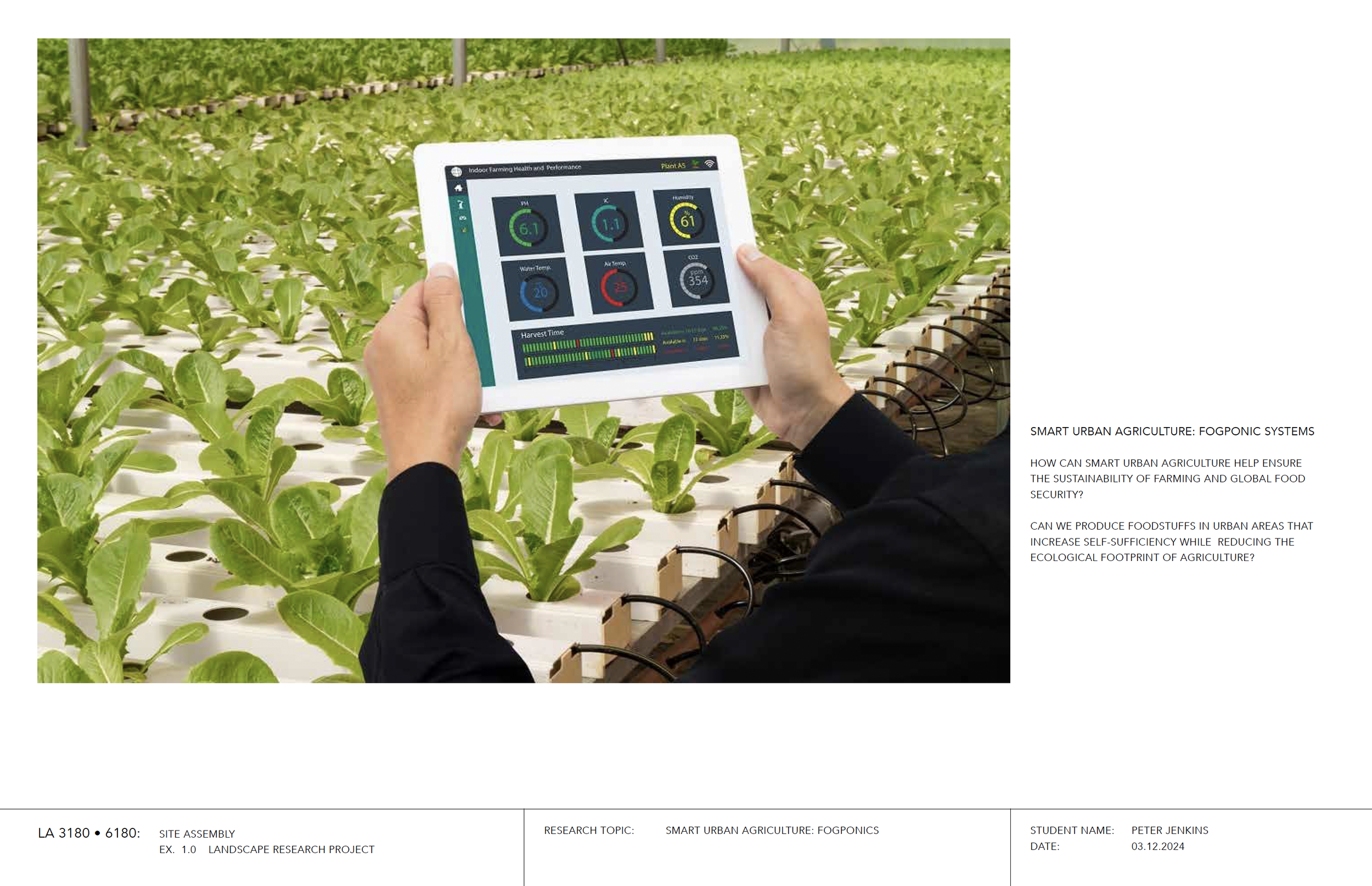
Forms of Fog + Fog for Fairness
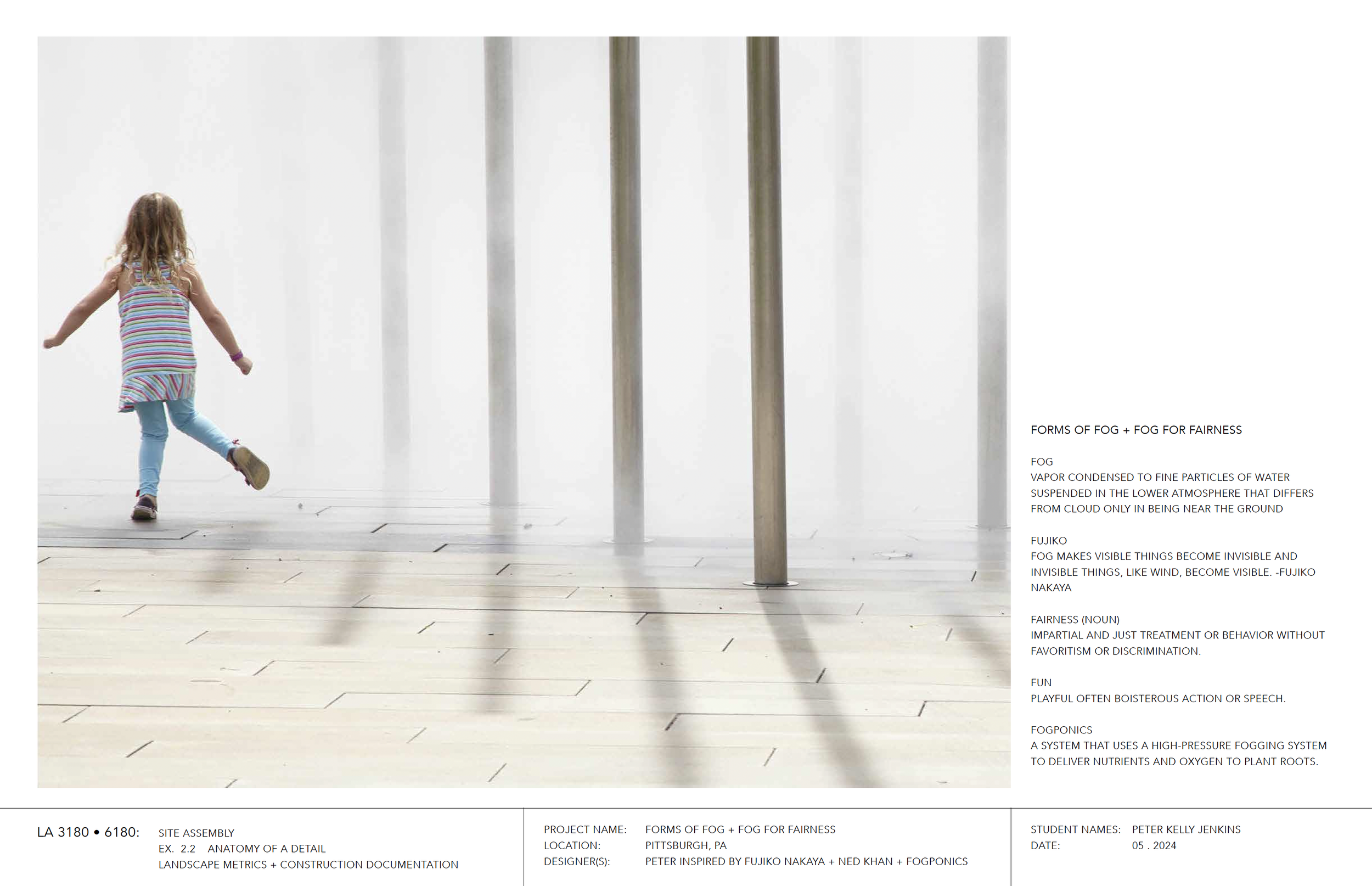
Fogponic Foodstuffs Misting Pole


The High Cost of Smart Indoor Agriculture

ABSTRACT
The demand for food security is intensifying as global population and urbanization rates surge toward 2050, compounded by climate change and disruptions to food supply chains. While urban agriculture has been proposed as one solution, recent studies reveal its potential for a higher carbon footprint. Controlled Environment Agriculture (CEA) and indoor vertical farming offer promising alternatives, yet Smart Vertical Farming remains energy-intensive and often reliant on fossil fuels.
To ensure long-term sustainability, indoor vertical farming must pivot toward clean, renewable energy sources to meet its substantial energy demands. This transition will require continued innovation to address the energy requirements of LED-based indoor lighting for plant growth, the resource-intensive technological components of CEA, and the need for vertical farming systems to adapt holistically to the challenges shaping the future of food within increasingly vulnerable food systems.
“People are coming up with more creative solutions for energy sources, but I think they will always struggle with energy usage.”
— Eddy Badrina, CEO, Eden Green Technology